
What Makes a Number Plate Illegal?
UK number plate regulations are precise and strictly enforced. What might seem like a minor modification or creative personalisation can result in fines up to £1,000, MOT failure, and in serious cases, your vehicle being taken off the road.
Font and Character Requirements
All number plates manufactured after 1st September 2001 must use the Charles Wright 2001 typeface. Any deviation from this font, whether in style, thickness, or size, renders the plate non-compliant and illegal.
Each character must also be 79mm tall and 50mm wide, with specific proportions for strokes and angles. The stroke width, which is the thickness of the black lines forming each character, must be exactly 14mm. These measurements allow both ANPR cameras and the human eye to read plates easily under all conditions.
The number 1 and letter I are exceptions to the width rule as they are naturally narrower, but all other characters must meet the exact specifications. Even a few millimetres variation can trigger enforcement action or MOT failure.
Spacing
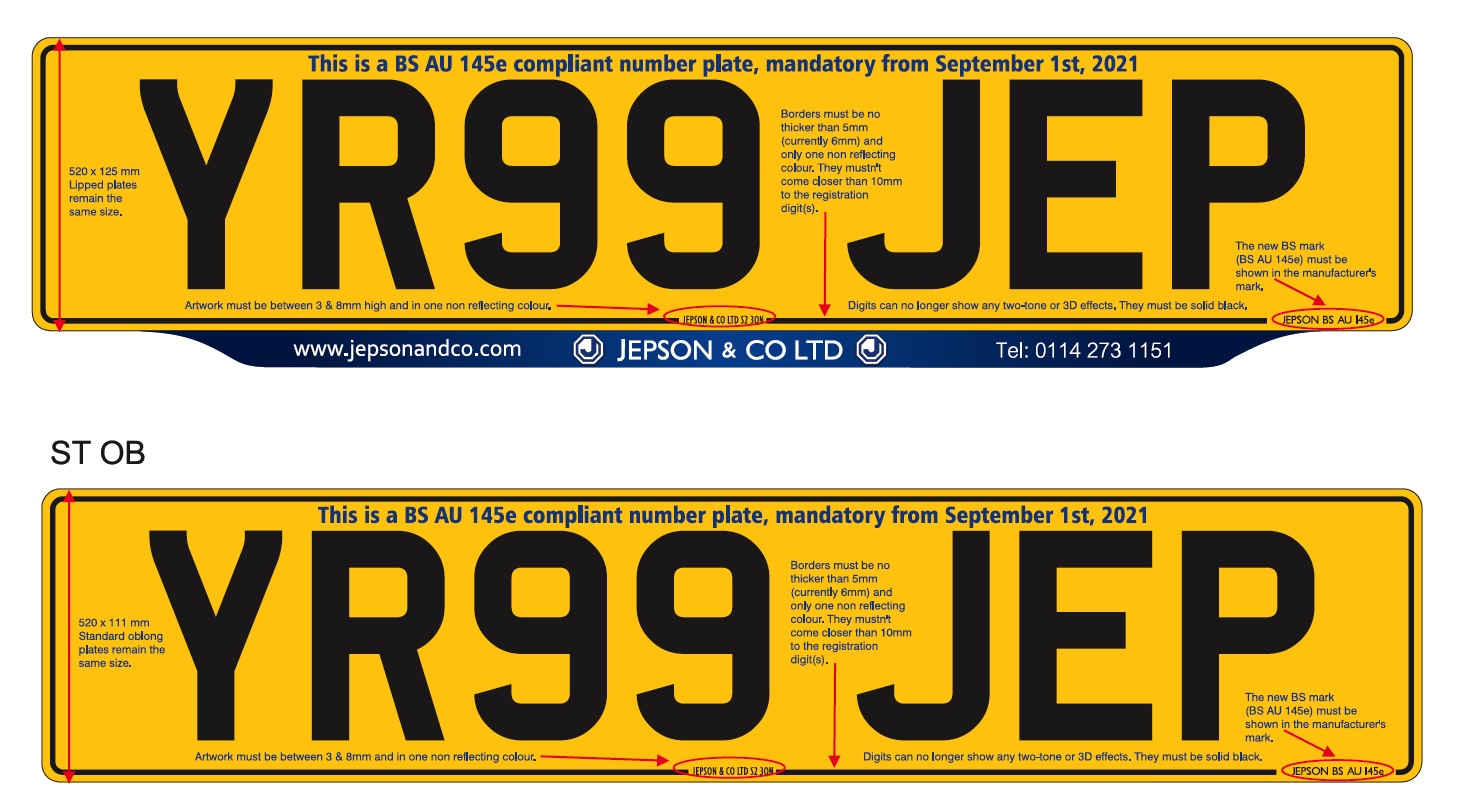
There must be 11mm spacing between individual characters within each group. Between the two main groups of the registration (for example, between the age identifier and the final three letters), a larger 33mm gap is required.
Fines can reach £1,000 for illegal number plate spacing, and your vehicle will fail its MOT until the plate is corrected.
Colour and Material Standards
Number plates must be constructed from reflective material, though crucially, the characters themselves must not be reflective. This ensures they remain legible under varying light conditions, particularly at night under headlights.
The front plate requires a white background with black characters. The rear plate must display a yellow background with black characters. These colours are mandatory across all UK vehicles. Tinted plates, alternative background colours, or any attempt to darken the plate to reduce contrast between background and characters constitutes a breach of regulations.
All characters must be the same shade of black, too. Filters or covers that darken plates are also illegal as they reduce contrast and readability. Similarly, reflective sprays intended to create glare when photographed by speed cameras disappeared quickly when people realised they didn't work and only attracted police attention.
British Standard Marking
Every compliant number plate must display the British Standard Number, which certifies that the plate meets durability, visibility, and reflectivity requirements and has received DVLA approval. Since 2021, all new number plates must meet the BS AU 145e standard.
The plate must also display the supplier's name and postcode at the bottom centre. This ensures traceability and verifies that the plate meets all performance benchmarks.
Shape and Positioning
Number plates must be rectangular and correctly positioned on the vehicle according to regulatory standards, which vary depending on vehicle type. Custom shapes, arrangements, or improper positioning can make a number plate illegal.
Fasteners must be placed at least 10mm from characters to avoid obscuring them or confusing ANPR scanning. Improperly positioned screws or bolts can cause MOT failure even if the plate itself is otherwise compliant.
Offensive or Banned Combinations
The DVLA maintains discretion to refuse or withdraw registration marks it deems offensive, inappropriate, or provocative. This extends beyond the plate's physical construction to the registration combination itself.
The DVLA reviews potential combinations twice yearly, banning hundreds of plates each cycle. Banned categories include plates resembling offensive words, sexual references, religious insensitivity, references to violence or crime, drug-related terms, and politically sensitive combinations.
Visibility
It is illegal to drive with dirty or obstructed number plates in the UK. Number plates must remain readable and visible to police officers and ANPR cameras at all times. Driving with an obscured plate can result in a fine of up to £1,000, and your car may fail its MOT if the plate cannot be read clearly.
Ghost Number Plates and ANPR Evasion
Ghost plates represent a serious category of illegal plates designed to evade enforcement cameras. Some are manufactured to resemble official DVLA-issued plates but use incorrect fonts, colours, or designs that fall just outside regulatory specifications while remaining superficially convincing.
Ghost plates are often used to avoid congestion charges, emission zone fees, road tolls, and penalties for traffic violations. By masking a vehicle's true identity, offenders bypass automated systems that rely on number plate recognition technology.
Ghost plates are illegal in the UK. Current penalties remain limited to a £100 fixed penalty notice with no penalty points imposed. This relatively modest sanction has prompted criticism from road safety campaigners and motoring organisations who argue the penalty fails to reflect the seriousness of the offence or deter persistent offenders.
3D and 4D Plates
3D gel plates and 4D raised acrylic plates remain legal in 2026, but only if they meet specific standards. Characters must be solid black with no two-tone shading effects, and the plates must conform to BS AU 145e standards and not interfere with visibility or ANPR readability.
3D gel plates feature raised gel resin characters that add depth and shine while maintaining full legality under UK law. 4D plates use laser-cut acrylic characters that sit prominently above the plate base, creating a sharp, modern appearance.
However, many drivers misunderstand the rules around these plates. Adding special effects that make the plate hard to read renders it illegal, regardless of whether it started as a compliant 3D or 4D design. The enhancement must not compromise clarity or readability under any lighting conditions.
Simply put, if 3D or 4D styling interferes with ANPR camera recognition or makes characters less distinct, the plate will cause MOT failure even though the base format is theoretically legal.
Show Plates
Show plates are designed for events, exhibitions, or off-road use. They may feature custom fonts, backgrounds, or designs that don't meet DVLA standards. They are illegal for public road use unless they meet all regulatory requirements exactly.
Most show plates use non-standard fonts, lack British Standard markings, or display alternative colour schemes. Using them on the road can result in fines and MOT failure. Legitimate suppliers clearly mark show plates for non-road use and require specific documentation before producing them.
The distinction matters because show plates look professional and well-made, potentially fooling drivers into thinking they're road-legal. They're not, regardless of quality or appearance.
Age Misrepresentation
You cannot make a vehicle appear newer than it actually is through number plate selection. For example, a 2018 car cannot legally display a 24 plate.
This rule prevents fraud and makes sure registrations accurately reflect vehicle age. Attempting to misrepresent vehicle age through plate selection is illegal and will be identified during MOT testing or police checks.
Dateless number plates, which contain no year identifier, can be fitted to vehicles of any age. This is the legal method for hiding a vehicle's age.
How to Stay Compliant When Buying a Private Number Plate
Only purchase plates from DVLA-registered suppliers, such as Jepson & Co Ltd. Legal suppliers like these verify ownership documents before issuing plates, so plates cannot be easily obtained for fraudulent purposes and that all regulatory requirements are met. When you buy a private reg through National Numbers, you’ll have the option to buy physical number plates through Jepson & Co Ltd, as they are our sister company.
Buy Private Number Plates with National Numbers
National Numbers is one of the original DVLA-approved private number plate dealers in the UK. With over 40 years of experience, we ensure every plate we supply meets current DVLA regulations and is manufactured to BS AU 145e standards by registered suppliers.
Call our friendly, expert team on 01642 363738 or search online for your perfect private number plate.